








Can You Use EAs at a Prop Firm? It Depends on Which One You Choose
Algorithmic trading has been gaining ground among retail traders for years. Expert Advisors (EAs), bots, and automated systems are no longer exclusive to hedge funds or investment banks — any trader with programming knowledge can design their own strategy and execute it without manual intervention.
The problem comes when that trader wants to scale with funded capital. Not all prop firms share the same stance on automated trading, and making the wrong choice can cost you a disqualification or even a rejected payout.
In this article, we cover which prop firms accept EAs, under what conditions, and what you need to check before automating your trading with funded capital.
Why Some Firms Prohibit EAs
Before diving into the list, it's worth understanding the logic behind the restrictions.
Prop firms make money when their traders generate profits. But they also manage risk. Poorly configured automated systems can trigger drawdowns in minutes or exploit trading system vulnerabilities (latency arbitrage, order flooding, uncontrolled grid trading).
That's why even firms that allow EAs tend to add caveats:
- Arbitrage or high-frequency trading strategies are not permitted
- Using the same EA across multiple accounts at the same firm as copy trading is not allowed
- Some firms may request to review the code or logic of the EA after you pass the evaluation
With that in mind, here are the firms that most clearly allow EAs on their funded accounts.
The Best Prop Firms That Accept EAs
FTMO
FTMO is one of the industry benchmarks and allows EAs without explicit restrictions across all its challenge types. Its static drawdown and well-defined rules make it relatively predictable for designing automated strategies.
Account sizes range from $5,000 to $400,000, with platforms including MT4, MT5, cTrader, and DXTrade. The profit split is 80%, scalable to 90% after the first scaling step.
Blueberry Funded
Blueberry Funded is another firm that allows EAs with no documented restrictions. It works with MT4, MT5, TradeLocker, and DXTrade, making it compatible with most EAs developed in MQL4/MQL5.
It offers 1-Step, 2-Step, and Instant Funding challenges, with accounts ranging from $5,000 to $250,000. Profit split of 80%, scalable to 90%.
FundedNext
FundedNext allows EAs, but with one important caveat: you need to purchase the EA Add-on (+5% on top of the challenge price). It's an additional cost to factor in, but the firm offers a wide variety of challenge types (Stellar 1-Step, 2-Step, Lite, and Instant) and platforms including MT4, MT5, cTrader, MatchTrader, and TradingView.
Funded Trading Plus
Funded Trading Plus explicitly permits EAs, algorithms, and bots. The only caveats are that they must not be used for copy trading between accounts or for cross-account hedging strategies. The firm also notes that it may request to review the EA after you pass the evaluation, though it does not provide technical support for third-party EAs.
Accounts from $5,000 to $100,000, with platforms MT5, DXTrade, MatchTrader, and cTrader.
FundedNext Futures
If you trade futures, FundedNext Futures allows EAs and bots both during the challenge phase and on funded accounts. The only prohibitions are strategies that exploit system vulnerabilities (latency abuse, order flooding), which is reasonable and common across any serious firm.
Platforms include Tradovate, NinjaTrader, and TradingView.
Other Firms That Also Allow EAs
Beyond the options above, several other firms from the full listing also have a favorable policy toward EAs:
The 5%ers is known for its conservative approach to risk management, but does allow EAs. It's a solid choice for low-drawdown systems that trade consistently without aggressive position sizing. Their progressive scaling model also pairs well with automated strategies that generate steady, moderate returns over time.
E8 also permits automated trading. Its two-step challenge structure and static drawdown make it relatively friendly for algorithmic strategies that need clear loss limits to work within. If your EA tends to hold positions for several days, E8 is worth considering.
City Traders Imperium allows EAs and is particularly interesting for traders who combine manual and automated trading, as it offers flexibility in its ruleset. Their instant funding model may also appeal to traders with a proven track record, though in that case you should verify the specific EA restrictions for that account type.
Goat Funded Trader and Ment Funding are two newer options with a permissive EA policy and competitive pricing on evaluation fees and profit splits. Their shorter track record means less public payout history, but their conditions are comparable to more established firms.
Lark and Bright Funded are two more options in the ecosystem with EA support enabled. If you're comparing multiple alternatives at the same time, the forex firms comparator lets you contrast them side by side without having to visit each page individually.
Firms That Allow EAs With Important Restrictions
Hantec Trader
Hantec Trader allows EAs on its Challenge-type accounts (Enhanced, EnhancedX, Express), but explicitly prohibits them on Instant Funding accounts. If you start with Instant, you'll need to trade manually.
DNA Funded
DNA Funded has a similar policy: EAs and algorithmic trading are permitted on its 1-Phase, 2-Phase, and Rapid challenges, but are strictly prohibited on Instant Funding accounts.
Audacity Capital
Audacity Capital allows EAs, but with a restriction that significantly changes the landscape: only self-developed EAs are permitted. The use of commercial, publicly available, or third-party-created automated tools is strictly prohibited. If you develop your own strategies independently, this restriction doesn't affect you. But if you use a purchased or downloaded EA, you won't be able to trade here with it.
Quick Comparison Table
| Firm | EAs allowed | Challenge types | Platforms | Profit split |
|---|---|---|---|---|
| FTMO | Yes | 1-Step, 2-Step, Swing | MT4, MT5, cTrader, DXTrade | 80–90% |
| Blueberry Funded | Yes | 1-Step, 2-Step, Instant | MT4, MT5, TradeLocker, DXTrade | 80–90% |
| FundedNext | Yes (add-on +5%) | Stellar 1/2-Step, Lite, Instant | MT4, MT5, cTrader, MatchTrader, TradingView | 80–95% |
| Funded Trading Plus | Yes | 1-Step Express, 2-Step, Instant | MT5, DXTrade, MatchTrader, cTrader | 80–100% |
| FundedNext Futures | Yes | Rapid, Legacy | Tradovate, NinjaTrader, TradingView | 80% |
| Hantec Trader | Challenge only | Enhanced, EnhancedX, Express | MT4, MT5 | 80–90% |
| DNA Funded | Challenge only (not Instant) | 1-Phase, 2-Phase, Rapid | TradeLocker | 80–90% |
| Audacity Capital | Self-developed only | Ability, Funded Trader | MT4, MT5 | 50–90% |
What to Check Before Using an EA at a Prop Firm
Beyond whether a firm "allows EAs" or not, there are other factors that make a real difference in practice:
Drawdown type
EAs with wide backtested drawdowns may find the firm's daily or total drawdown limit too restrictive. Firms with static drawdown (like FTMO, Blueberry, or FundedNext) are more predictable for automated systems than those using trailing drawdown. With a trailing drawdown, every profit you make raises the minimum equity level, which can trap an EA that isn't designed for that kind of dynamic restriction.
Time-based restrictions
Some firms don't allow holding positions open over the weekend or around high-impact news events. An EA that doesn't manage these filters can get you disqualified even if the strategy is profitable. Before activating the bot, check whether your firm has rules around news trading or overnight positions. Most EAs have time-based filter parameters — make sure these are correctly configured from day one.
Prohibited strategy types
Grid trading, martingale, latency arbitrage, copy trading between accounts — these are strategies frequently prohibited even at firms that allow EAs. Always read the specific ruleset, not just the general "yes, we allow EAs" answer.
Technical support
Most firms don't offer support for configuring or troubleshooting third-party EAs. Funded Trading Plus explicitly states this. Assuming you can ask for help if your EA breaks is a common mistake. If your system relies on an external provider or a VPS with specific configuration requirements, make sure you can manage all of that independently before starting the evaluation.
How to Test an EA Before Risking Capital on an Evaluation
Starting a paid challenge directly with an untested EA is one of the most expensive mistakes in prop trading. Here are some ways to reduce that risk:
Thorough backtest with quality data
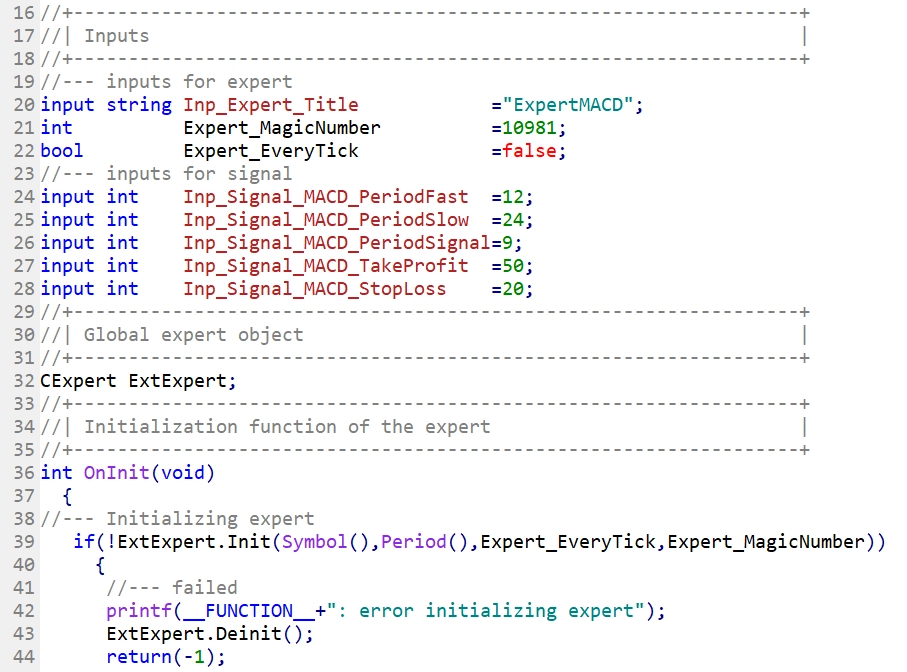
Before connecting the EA to a real or evaluation account, run backtests with high-quality tick data (90%+ modelling quality in MetaTrader) on the same pair, timeframe, and conditions you plan to use. Pay close attention to the maximum recorded drawdown: if it reaches 7% in backtesting and the firm's limit is 8%, that margin is dangerously thin. Backtests using low-quality data or fixed spreads won't reflect what will happen in real conditions.
Forward testing on a demo account
Many firms offer free demo accounts. Use them. Run the EA for at least 2–4 weeks in real market conditions before paying for the evaluation. What works in backtesting doesn't always work in live trading, and a demo account will tell you that at no cost. Pay particular attention to high-volatility days and macroeconomic data releases — these are the moments where poorly configured EAs tend to deliver nasty surprises.
Reduce risk per trade for the challenge
Most EAs can be configured with different risk levels per trade. For the evaluation phase, cut the risk per trade to half of what you'd use on a personal account. The goal is to pass the challenge with a comfortable margin, not to maximize gains. An EA that risks 2% per trade on your own account should be running at 1% during the evaluation.
Monitor actively during the first few days
For the first days with the EA running on the evaluation, keep an eye on its behavior. Market conditions change, and an EA that performs well in trending markets can struggle in ranging conditions. Knowing when to manually pause it is just as important as knowing how to configure it. Many experienced traders combine EA automation with a daily 10–15 minute check on account status and open trades.
Have a manual backup plan
If the EA fails during the evaluation due to a technical bug or broker connectivity issue, can you trade the same strategy manually? Having that knowledge as a fallback is the difference between salvaging an evaluation and losing it to a one-off technical problem.
Compare Your Options Before Deciding
Conditions change and each firm has its own nuances. The best approach is to use the forex firms comparator to contrast conditions in detail: drawdown limits, profit splits, account sizes, and available platforms, all in one place.
If you trade futures, the futures firms comparator lets you do the same for platforms specialized in that market. There are meaningful differences between futures and forex in terms of how drawdown is calculated and which platforms support EAs natively.
You can also explore the special features list to filter directly by features like EAs or other specific functionalities. It's a quick way to locate firms that offer exactly what you need without having to read through each firm's page one by one.
Another useful step is checking the trading platforms list: if your EA is built exclusively for MT5, for example, filtering by platform first and then cross-checking EA policy will save you time and prevent last-minute surprises when you're already mid-evaluation.
Finally, keep in mind that firm rules can change. A firm that prohibited EAs six months ago might have updated its policy, and vice versa. It's always worth checking the firm's official terms of service alongside any third-party comparison, especially if time has passed since you last looked.
Conclusion
Automated trading and prop firms are perfectly compatible if you choose wisely. Firms like FTMO, Blueberry Funded, Funded Trading Plus, or FundedNext Futures put no significant obstacles in the way of EA use, as long as you don't engage in explicitly prohibited strategies.
Restrictions tend to appear on Instant Funding accounts (more risk-sensitive) or in the form of banning third-party EAs (as with Audacity). Knowing those restrictions before paying for an evaluation saves you time, money, and frustration.
If you already have an EA with a proven track record, the next step is finding the firm that best fits its trading style, maximum drawdown, and the instruments it trades. And if you're still in the testing phase, start with demos before putting evaluation capital on the line.
Ultimately, the key is to treat the process as what it is: a compatibility exercise between your system and the firm's ruleset, not just a search for the cheapest evaluation fee. An EA that works perfectly at one firm can be an instant disqualification at another. Taking the time to read the terms of service carefully is always the best investment before you start. The firms listed here give you a solid starting point — the rest depends on matching their specific conditions to how your system actually behaves in live markets.
Published on
The community
Join us on our mission to become the most influential family in funded trading.
Join the DiscordDon't miss anything
Promotions, news and funded trading analysis straight to your inbox.
No spam. Unsubscribe anytime.